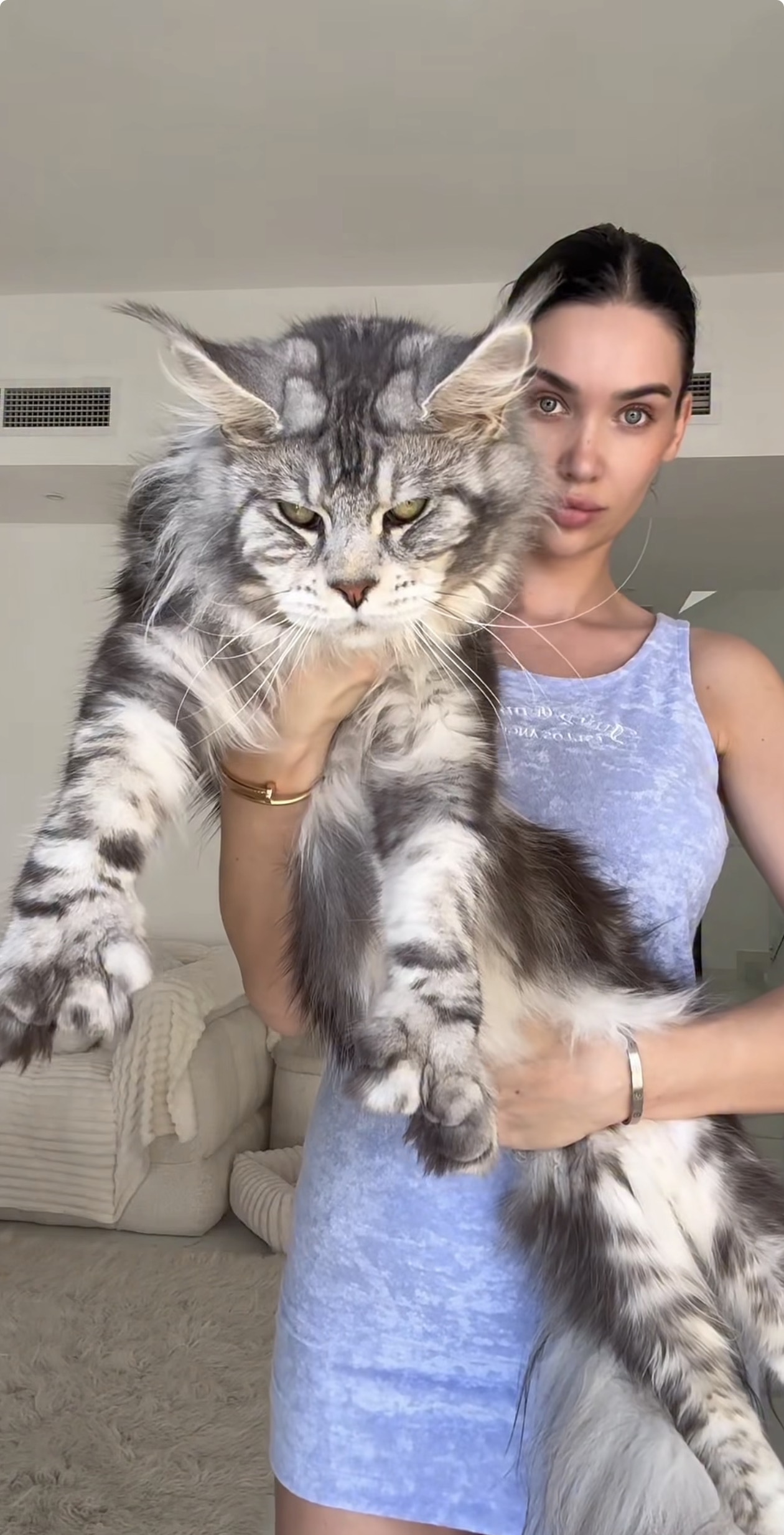
There is a moment, familiar to anyone who has spent time around a properly bred Maine Coon, when the sheer scale of the animal stops you mid-sentence. You are expecting a cat. What walks toward you is something closer to a small, impeccably groomed lynx: tufted ears catching the light, a chest as broad as a dinner plate, paws the size of a child’s fist, and eyes that hold you with an intelligence that feels almost presumptuous for a creature whose main job is to be beloved. That moment, replicated daily in a Dubai home, is the entire premise of Gentle Giants Maine Coon Cattery, one of the UAE’s most-watched pedigree cat breeders.
Operating under the Instagram handle @gentlegiantsdxb, the cattery has built a verified following of around 53,000 people, according to its Instagram profile, a number that speaks to an audience hungry not just for cute animal content but for something rarer in the UAE’s pet-buying landscape: transparency, documentation and genuine breed knowledge. Their feed reads less like a sales channel and more like a visual diary: queens at rest, kittens tumbling across plush interiors, profile shots of named cats that have become small celebrities in their own right.
Meet Pasha, Beluga, and the Queens Behind the Programme
Two names appear repeatedly across the cattery’s content and highlight reels: Pasha, a blue/grey male whose slate colouring and commanding presence have made him something of a mascot for the operation, and Beluga, a white cat whose name gestures, with some wit, at both his colouring and his substantial size. According to the cattery’s Instagram profile, their cats are bred to the XL, lion-type standard, an aesthetic that prioritises extreme structural presence: the square muzzle, the high cheekbones, the neck ruff that frames the face like a medieval collar.
The Instagram highlights are organised with the thoroughness of a responsible breeder: a “Queens” album documents the breeding females, a “Available Kittens” section gives prospective buyers a structured way to assess litters, and a “Furever Homes” collection does what the best breeders do instinctively, it follows the story after the sale, showing kittens settled into Dubai apartments and villas, a small but meaningful act of accountability that distinguishes a committed programme from a transactional one. The cattery describes itself, again per its Instagram profile, as WCF registered and health tested. Those two phrases carry more weight than casual scrolling might suggest, and they deserve unpacking for anyone thinking seriously about this breed.
What the WCF Registration Actually Means
The World Cat Federation is an international registry association of cat clubs, founded in 1988 in Rio de Janeiro and currently one of the nine members of the World Cat Congress, making it one of the major reputable cat registries for pedigree registration of cat breeds worldwide. Registering a cattery with the WCF is not a rubber-stamp exercise. The breeder must be a member of a WCF club, the cattery must have a registered WCF cattery name, and the registering breeder must be the legal owner of the dam and able to prove ownership. The cattery must follow WCF and member club breeding rules, as well as local government laws concerning the protection of animals.
For buyers, the practical upshot is that a WCF-registered kitten comes with a traceable pedigree document. The sales contract must contain all information about the breeder, new owner and complete details of the cat, and should include a health certificate and information about the special needs of the breed. WCF certification means the kitten’s pedigree has been officially documented, the breeder follows guidelines around health testing, care and proper breeding age, the kitten meets a specific breed standard, and you have access to verified lineage, which can be important for health tracking in the future.
The Breed Itself: A Very Brief Natural History
The Maine Coon is a large domesticated cat breed that originated in the US state of Maine, where it is the official state cat. It is a large and social cat, commonly referred to as “the gentle giant,” predominantly known for its large size and its long and dense coat of fur. Maine Coons are descendants of cats brought to New England by Puritan settlers from the UK in the 1600s and 1700s. It is not relatedness but convergent evolution that makes them resemble Siberian and Norwegian Forest cats: all three breeds formed in harsh climates where thick long coats, toe and ear tufts, big bodies and snowshoe-like big feet were useful traits.
The Maine Coon is the largest domestic cat breed, coming in at 10 to 16 inches tall and up to an impressive 40 inches in length. These sturdily built felines usually weigh 8 to 18 pounds and have muscular bodies with wide chests and solid legs. Males bred to the European XL standard, as the @gentlegiantsdxb programme aims for, can exceed those figures considerably. Maine Coons are slow to mature, often taking three to five years before fully grown. That extended growth window is part of what makes the breed so captivating to follow, and so demanding to breed responsibly.
Temperamentally, the Maine Coon is almost paradoxically easy to love. Despite their size, the Maine Coon cat is sweet-tempered, gentle and friendly and gets along with just about everyone. They have a clown-like personality and are willing to help their owners, yet aren’t demanding of attention. Despite their size, Maine Coons are gentle giants who thrive on family interaction. They love to follow their humans around the house, ensuring they are part of every moment. Though affectionate and social, they are not usually lap cats, typically preferring to hang out beside you rather than on top of you. The breed is often cited as having “dog-like” characteristics. Owners describe cats that learn their name, respond to commands, fetch toys and greet visitors at the door with the confidence of someone who has been expecting you., -
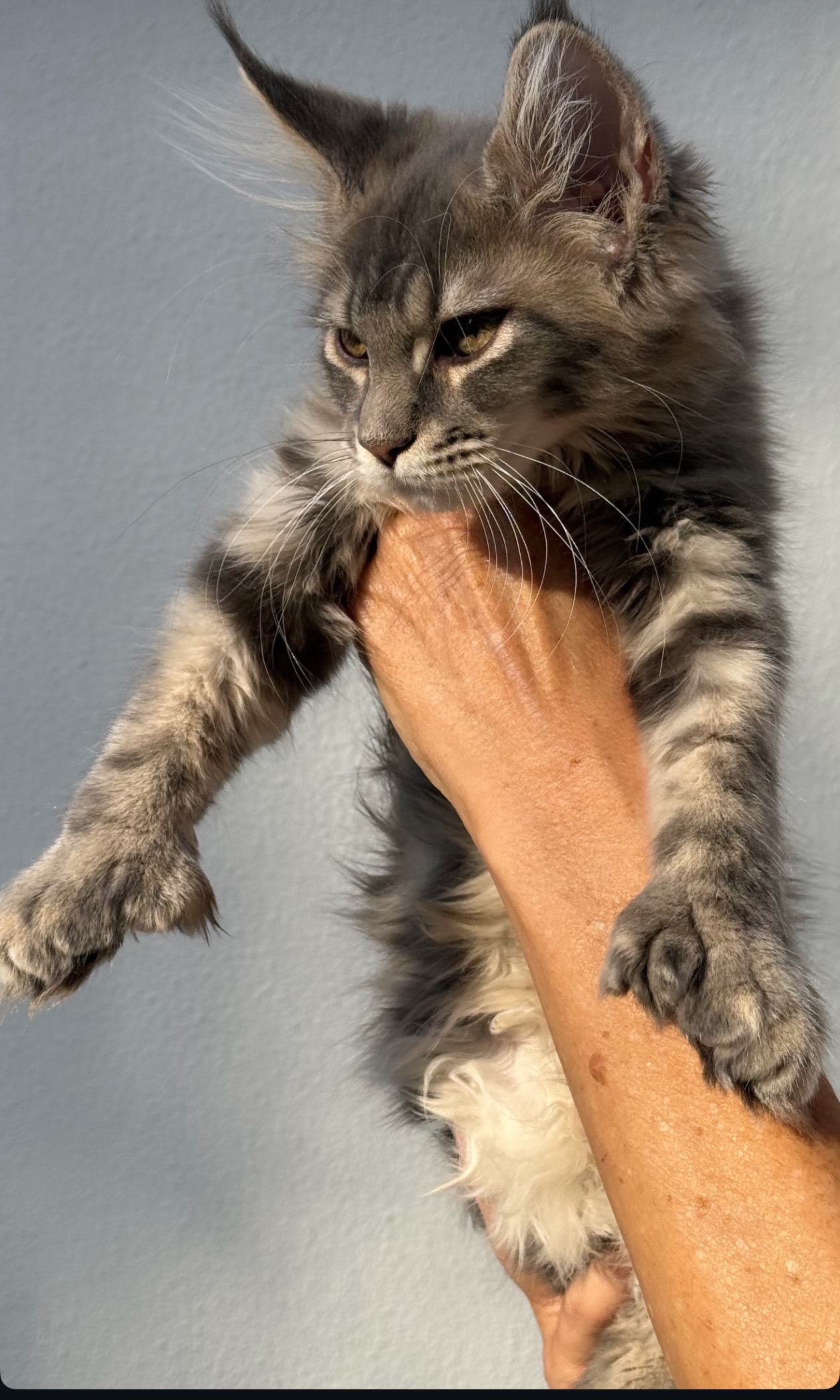
Photos courtesy of Gentle Giants Maine Coon Cattery (@gentlegiantsdxb), used with permission.
A Practical Guide for UAE Residents: Before You Commit to a Maine Coon
The Health Testing Question (Non-Negotiable)
The single most important thing to understand about Maine Coons and health is that the breed carries specific genetic vulnerabilities that conscientious breeders screen for before any mating takes place. Maine Coons are predisposed to four genetic anomalies: HCM, PKD, PKDef and SMA, that should be screened for prior to breeding.
Hypertrophic Cardiomyopathy (HCM) is the most common heart disease in cats, causing the muscular walls of the heart to thicken and severely restrict function. It is often a silent disease that can lead to sudden, fatal cardiac arrest, particularly in giant breeds like the Maine Coon. Around 30% of Maine Coon cats carry a gene that increases their risk of HCM. DNA testing alone is not sufficient. Since there are a number of different HCM genes and to date only one (HCMmc) can be tested using DNA swabbing, it is strongly advised that breeders use the precise term “HCMmc” rather than just “HCM” to prevent misunderstandings about the scope of testing. It is also strongly recommended that regular heart scans are conducted on breeding animals, even after they have stopped being used for breeding, as this can flag up other heart issues including forms of HCM that cannot be identified by DNA swabbing.
PKD causes cysts to form in the kidneys, potentially leading to kidney failure, and DNA testing allows breeders to completely eliminate this condition from their breeding lines. SMA (Spinal Muscular Atrophy) is a genetic disorder affecting motor neurons, leading to muscle weakness. DNA testing identifies carriers, allowing informed breeding decisions and preventing affected kittens.
Ask any prospective breeder to show you the actual laboratory certificates for both the queen and the stud used in your kitten’s litter. Results should be from a recognised genetics laboratory. A verbal assurance is not documentation.
WCF and Pedigree Papers: What You Should Receive
A pedigree is a registration paper certifying that your kitten belongs to a breed and containing the genealogy of the cat, generally four or five generations. For it to be reliable, it should be issued by a reputable cat breed registry such as TICA, FIFe, WCF or CFA. If the breeder asks for more money to give you the pedigree, or claims that you do not need one because you will not be breeding the kitten, walk away. All “breeders” breeding cats without a pedigree are backyard breeders.
The original pedigree document should travel with the cat. The original pedigree is issued to the cat and the original must always stay with the cat.
The Sale Contract
Carefully read any contract or agreement before signing. Ensure that the contract includes details about health guarantees and return policies. Be certain to enter into a written contract with the breeder. A good breeder will include a clause that the kitten cannot be resold or surrendered to a shelter, and if, for any reason, you cannot keep the kitten, the breeder must be notified and will either help to rehome the cat or take it back.
UAE Pet Rules: Vaccinations, Microchipping and Import
If you are bringing a Maine Coon into the UAE from abroad, the regulatory framework is managed by the Ministry of Climate Change and Environment (MOCCAE). The key requirements are:
Microchip first. The microchip must be readable and match the number on all supporting documents. Critically, the rabies vaccine must be administered on or after the date of microchipping. If a pet is vaccinated prior to being chipped, that vaccination will not be accepted. The microchip must be ISO 11784/11785 compliant.
Core vaccinations for cats. Cats must receive vaccinations for Feline Viral Rhinotracheitis, Calicivirus and Panleukopenia (FVRCP). All vaccines must be administered at least 21 days before travel but not more than 12 months prior to the date of arrival.
Country risk classification matters. Pets from high-risk countries need a rabies titer test from an approved lab, while if your pet is from a low-risk country, you only need basic vaccinations, a microchip and a health certificate.
Age at import. The UAE enforces minimum age requirements: pets must be at least 12 weeks old when travelling from low-risk countries and 15 weeks old from high-risk countries. This is relevant because reputable breeders should not be releasing kittens before 12 to 14 weeks in any case.
Import permit. Obtain an import permit prior to arrival through the MOCCAE website. The import permit remains valid for 30 days, and importing pets with an expired permit is not allowed.
Licensing in the UAE. Pet breeding for the purpose of sale, or selling pets in general, is allowed in the UAE if you have a valid license issued by the Ministry of Climate Change and Environment (MOCCAE). To legally operate, pet breeders and pet shops in the UAE must have a valid License for Practicing Animal Care Activities. Always ask to see this license.
Realistic Costs in Dubai
Pedigree kittens from licensed breeders in Dubai generally range from AED 3,000 to AED 8,000 and above, depending on the breed. Maine Coons, particularly show-quality or XL-type animals, tend to sit toward the upper end of that range. Beyond the purchase price, budget for ongoing costs: vaccinations and annual check-ups typically run AED 500 to AED 800 per year in Dubai. A breed with this level of coat also requires regular professional grooming. Proper and routine health testing is expensive if done correctly, and proper care and nutrition for a Maine Coon is costly. A genuinely low price from any breeder of this breed should prompt questions, not celebration.
Red Flags vs Signs of an Ethical Breeder
Red flags to watch for:
Suspiciously low prices or a “free” cat requiring payment for shipping, lack of knowledge about the breed or reluctance to answer questions, and no veterinary records or unwillingness to provide verifiable references are all warning signs. Claims of “imported from Europe” or “purebred” without verifiable documents from recognised authorities are often marketing, not fact. Anyone refusing to show the animal live, especially if dealing online, likely has something to hide.
Signs of an ethical breeder:
The breeder is registered with a reputable organisation or club specific to the breed, and you can visit in person to see the conditions in which the animals are raised. A breeder should be transparent, listing all their male and female cats with pedigree pictures and pictures of their health tests. Ethical breeding recognises that health testing is not a one-time event: cats change as they age and responsible breeders monitor health over time, ensuring that breeding decisions remain informed, thoughtful and aligned with the cats’ well-being., -
FAQ
How big do Maine Coons actually get, and will one suit a Dubai apartment?
Adult males can weigh up to 25 pounds, with their slightly daintier female counterparts weighing 10 to 14 pounds. Despite this, the breed adapts well to indoor living. The Maine Coon is sweet-tempered and gentle and adapts to any environment as long as she has some exercise room. A tall cat tree, interactive play sessions and ideally a second cat for company make apartment life entirely workable.
What does “WCF registered” on the pedigree actually guarantee me as a buyer?
WCF registration signals the breeder’s global perspective and adherence to standards that prioritise the well-being of cats across various national contexts. Feline association certifications are more than just a piece of paper: they represent a breeder’s commitment to quality, ethics and the future of feline genetics. It does not guarantee perfect health, but it does mean the lineage is documented and verifiable, and that the breeder has agreed to a code of conduct.
My kitten was born in Dubai. Do I still need a microchip and vaccination record?
Yes. Dubai Municipality pet laws mandate microchipping, vaccinations and registration for cats in Dubai. Whether the cat was born locally or imported, compliance with these requirements is your responsibility as an owner. Ask your breeder to confirm the kitten has already been chipped and that the chip number matches all paperwork before you collect.
How do I know if a breeder’s health-test claims are genuine?
Request the original printed or PDF laboratory certificate, not a screenshot. The document should name the specific cat (matching the pedigree name), show the laboratory’s logo and accreditation, and state the specific test result (for example, HCMmc negative, PKD1 negative). Ask for health and genetic records for the sire and dam of the kittens, and request to see the parents either in person or through video if a visit is not possible. Any hesitation in producing these documents is a meaningful signal., -
This is a community feature, not a paid placement; always do your own checks before buying a pet., -
Sources:
- Gentle Giants Maine Coon Cattery Instagram profile: https://www.instagram.com/gentlegiantsdxb/
- World Cat Federation, Cattery Registration: https://wcf.de/en/cattery-registration/
- World Cat Federation, Breeding Rules: https://wcf.de/en/breeding-rules/
- World Cat Federation, Wikipedia overview: World Cat Federation - Wikipedia
- Maine Coon, Wikipedia: Maine Coon - Wikipedia
- TICA, Maine Coon Breed Profile: https://tica.org/breed/maine-coon/
- Daily Paws, Maine Coon Breed Information: https://www.dailypaws.com/cats-kittens/cat-breeds/maine-coon
- PetMD, Maine Coon Health and Care: Maine Coon Cat Breed Health and Care | PetMD
- WebMD Pets, What to Know About Maine Coon Cats: Maine Coon Cats: What to Know
- Hill’s Pet, Maine Coon Breed Profile: https://www.hillspet.com/cat-care/cat-breeds/maine-coon
- Maine Coon Cat Club, Breeding Advice and HCM: https://maine-coon-cat-club.com/breeding/breeder-advice/
- PawPeds, Breeding Recommendations HCM: https://www.pawpeds.com/cms/index.php/en/health-programmes/hcm/recommendations
- Aspenmainecoons.com, Why Ethical Health Testing Matters: https://www.aspenmainecoons.com/post/why-ethical-health-testing-matters-in-maine-coons-protecting-the-breed-the-parents-and-your-futu
- TICA Pet Buyer’s Guide: https://tica.org/pet-buyers-guide/
- The Little Carnivore, How to Find an Ethical Cat Breeder: Ethical breeding: How to find a good cat breeder? — The Little Carnivore
- Carry My Pet UAE, MOCCAE Import Rules: Bringing Your Pet to UAE: MOCCAE Import Rules Explained
- Furry Travel UAE, Essential Documents for Pets Travelling to Dubai: Essential Documents and Vaccinations Required for Pets Traveling to Dubai | Furry Travel
- Remitly, Pet Import Regulations UAE: https://www.remitly.com/blog/travel/pet-import-regulations/
- CatsInDubai.ae, Buying a Cat in Dubai: Cats in Dubai
- Fetchway.ae, Where to Buy Pets in Dubai 2025: Where to Buy Pets in Dubai – Trusted Stores & Breeders 2025
- ExpatWoman.com, Pet Breeding in the UAE: https://www.expatwoman.com/dubai/guide/faqs/pet-breeding-in-uae-it-allowed-and-where-to-find-legal-pet-breeders
- CatKing Cattery, TICA, CFA, WCF explained: TICA, CFA, WCF: What These Feline Associations Mean for You and Your Kitten | CatKing